
Who is Elon Musk? Exploring the Life and Achievements of a Visionary Innovator.
He is the CEO of Tesla, Inc., which makes electric vehicles and clean energy. He is also the founder, CEO, and Chief Engineer of SpaceX. SpaceX works to lower space transport costs and aims to help colonize Mars. Who is Elon Musk?
RICHEST PEOPLEBILLIONAIRES
Alibaba S
11/18/20254 min lesen
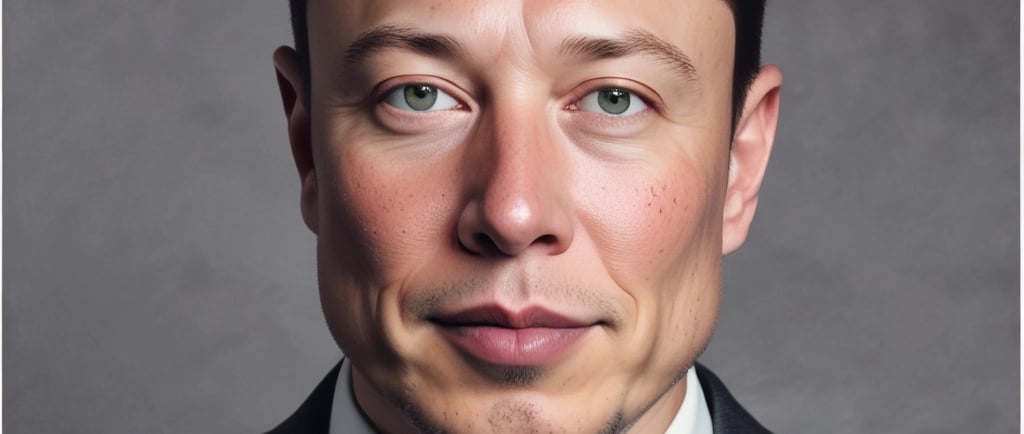
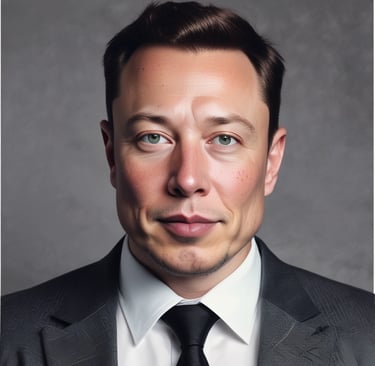
Early Life and Education
Elon Musk was born on June 28, 1971, in Pretoria, South Africa. He grew up in a diverse family. His Canadian mother, Maye Musk, is a model and dietitian. His South African father, Errol Musk, is an electromechanical engineer. Musk's drive for entrepreneurship and innovation stems from his parents. They combined creativity with technical skills. From a young age, he loved technology and reading. He often spent hours lost in books that sparked his imagination and curiosity.
During his formative years, Musk experienced the challenges of being an outsider. He faced bullying in school, which cultivated resilience and a sense of independence. By the age of twelve, he had already developed a video game called Blastar, which he sold for $500. This early venture showed his entrepreneurial mindset. It highlighted his knack for spotting opportunities and using technology for personal gain. Musk's childhood shaped his strong will to succeed despite challenges.
Elon Musk started his education at Queen's University in Kingston, Ontario, in 1989. This decision was a step toward independence and a smart choice for his future. After two years at Queen's, he moved to the University of Pennsylvania. There, he worked on a dual degree in physics and economics. These fields helped Musk build a solid grasp of science and market trends. Both were key in his future ventures. His education combined strong academic training with a natural love for technology. This mix gives him a unique view that inspires his visionary ideas today.
Career Beginnings and Major Ventures
Elon Musk began his business journey in the mid-1990s with Zip2. This software helped newspapers by offering online business directories and maps. He co-founded this venture with his brother, Kimbal Musk. They faced challenges in the tough world of early internet businesses. Zip2 gained traction, and Musk made a big profit. Compaq bought it in 1999 for almost $300 million. This success paved the way for Musk’s next venture, X.com, an online payment platform launched in 1999. X.com merged with Confinity. Confinity had created a money transfer service called PayPal. The new company led the way in digital payments. In 2002, eBay bought PayPal for $1.5 billion. This deal boosted Musk's reputation as a rising entrepreneur.
With the money from these early wins, Musk aimed to shake things up in different industries. In 2002, he founded SpaceX. His goal was clear: lower space travel costs and make colonizing Mars more possible. SpaceX faced many setbacks in its early years, like three failed launches. But these challenges only strengthened Musk's resolve. By 2008, SpaceX launched the Falcon 1. This was a big step for private aerospace. Musk’s vision for space exploration still inspires the company’s work.
In 2004, Musk became the leader of Tesla Motors. The company was having a hard time getting an electric car to market. His focus on sustainability and technology changed the automotive industry. Tesla became a leader in electric vehicles. Musk has pushed innovation's limits. He has changed industries and shown a strong drive for entrepreneurship and technology.
Innovations and Achievements
Elon Musk is known for innovation. He often challenges the status quo with his groundbreaking ventures. One of Musk's biggest innovations is SpaceX. It’s a private aerospace manufacturer and space transport services company. SpaceX has changed space travel and exploration. Its big projects include the Falcon rockets and Dragon spacecraft. The Falcon 1 was the first private liquid-fueled rocket to reach Earth orbit. This success opened the door for later models like the Falcon 9 and Falcon Heavy. These rockets cut space access costs. They also set new standards for reusability and efficiency.
The Dragon spacecraft achieved a big milestone. It was the first commercial spacecraft to bring cargo to the International Space Station. Musk’s advancements have boosted commercial space exploration. They’ve also inspired a new wave of scientists and engineers to explore what’s possible. Musk’s vision includes electric mobility. His work at Tesla has led to big changes in electric cars and renewable energy. Tesla's electric cars, like the Model S, Model 3, and Model X, offer great performance. They also use eco-friendly technology. This makes electric vehicles more appealing and accessible than ever.
Tesla's Solar Roof and Powerwall have changed the renewable energy scene. They offer combined solutions for homeowners who want energy independence. Musk's big projects include Neuralink, which aims to connect humans with AI. The Boring Company wants to ease city traffic by building new tunnels. These innovations show Musk's drive for technology. He aims to solve global problems and change humanity's future.
Philosophy and Future Aspirations
Elon Musk has a firm belief in technology's power. He thinks it can solve big challenges for humanity. His vision focuses on the idea that fast innovation is crucial for our survival and growth. Musk thinks combining artificial intelligence (AI) with human skills enhances productivity and creativity. He emphasizes that we need to regulate AI. This will help ensure developers create it responsibly and ethically. This nuanced perspective underlines his cautious optimism regarding technology.
Sustainable energy is another cornerstone of Musk’s philosophy. Through Tesla, he has pushed for a switch to renewable energy. This is essential to fight climate change. Musk supports electric transportation and solar energy. He sees these as key steps for a sustainable future. Tesla's ongoing battery tech advancements aim to boost electric vehicle efficiency. They also strive to create a self-sustaining energy ecosystem. He aims to solve environmental problems with fresh ideas. His bigger goal is a sustainable future for all.
Musk wants humanity to be a multi-planetary species. His plans for interplanetary colonization focus on SpaceX's bold Mars missions. He believes that a human settlement on Mars could be a "backup" for civilization. This would help ensure humanity's survival if catastrophic events happen on Earth. Musk's desire for exploration highlights his belief in human creativity. He envisions a future where technology improves life on Earth. It also opens new horizons beyond our planet.